Outline Stitch & Stem Stitch
Outline and Stem Stitch both form a simple line of short, adjacent or slightly overlapping stitches, usually worked left to right with the thread kept to one side.
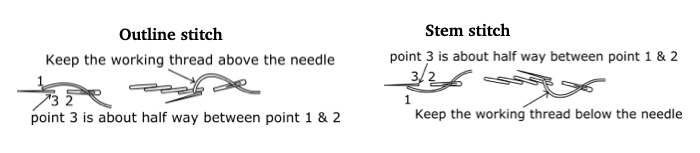
How: Bring the needle up, make a short forward stitch, bring the needle up ahead, and insert it at the end of the previous stitch so the thread stays to one side.
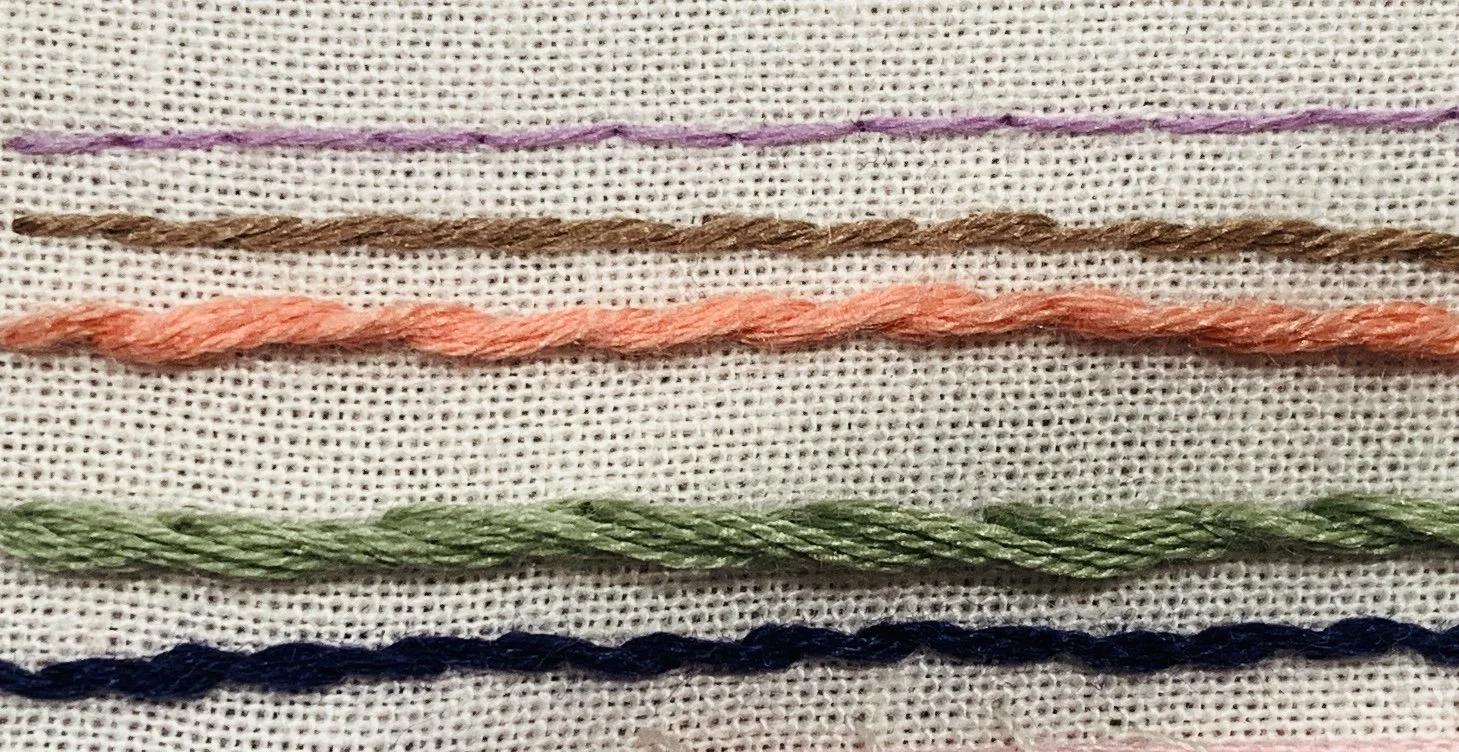
Appearance: Smooth, rope-like line with a subtle diagonal twist; slightly raised.
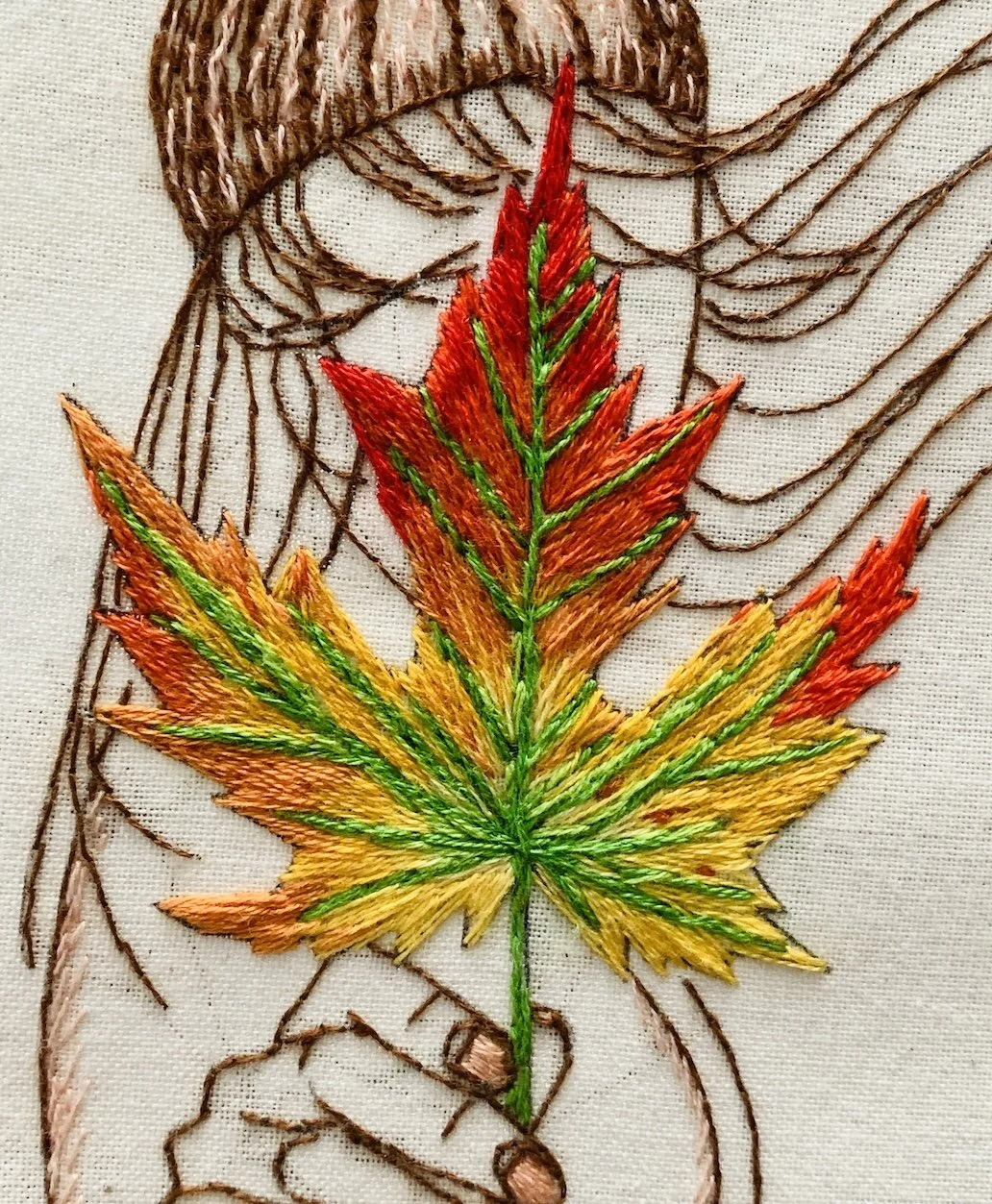
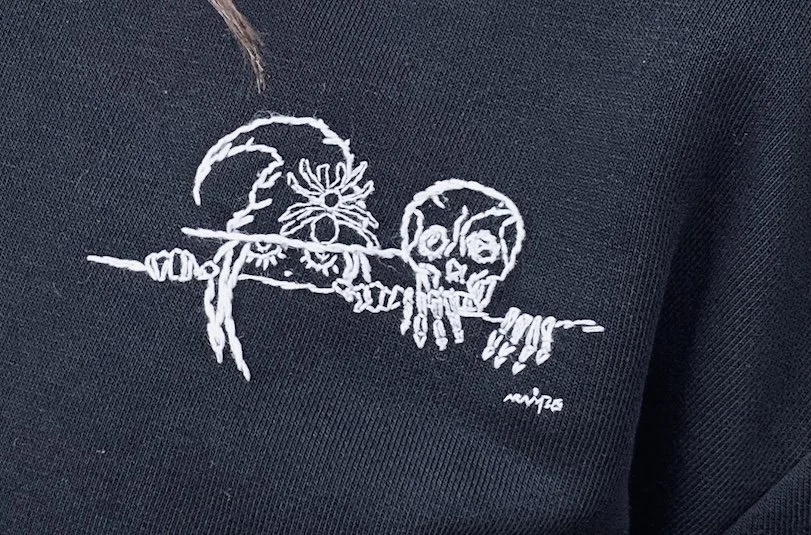
Structure: Overlapping stitches create a continuous textured cord, ideal for curves and stems and suitable for outlining a motif; it creates beautiful lines.
I believe the two stitches are basically the same in structure, but they are mirror images of each other. Both create a twisty, rope-like effect, but the direction of the twist differs between them. The direction is determined by where you keep your working thread while you are stitching.
Case 1: I am right-handed and prefer to stitch these from left to right or top to bottom. If I keep my working thread “above or to the right”, it is generally called Outline Stitch. If I keep my working thread “below or to the left”, it will generally be Stem Stitch.
Case 2: If you are left-handed (or simply prefer to work from right to left or bottom to top), the outcome of each stitch will look like the other one. Keeping the working thread “above or to the right“ will not produce an Outline Stitch in Case 1; instead, it will make the line look like Stem Stitch. Keeping the working thread “below or to the left “ will not make a Stem Stitch, but will create the same appearance as Outline Stitch in Case 1.
Confusing, right? I quietly decided that which direction the line twists and what the line is called are not so important — you can call it what you like. Happy stitching!
Wait — I should explain the structure of these stitches. For this purpose, I’ll use the stitch names according to the most common understanding of the twist directions. Stem Stitch is said to appear loopier and more rope-like than Outline Stitch. I’ve observed the same in my embroideries, though I can’t fully explain why. Since they are mirror images of each other, one being loopier than the other is hard for me to rationalize. Maybe the way a human hand moves in a certain direction creates a slight difference in the twist, even though the structure is the same. But let’s not overthink it.