Buttonhole Stitch
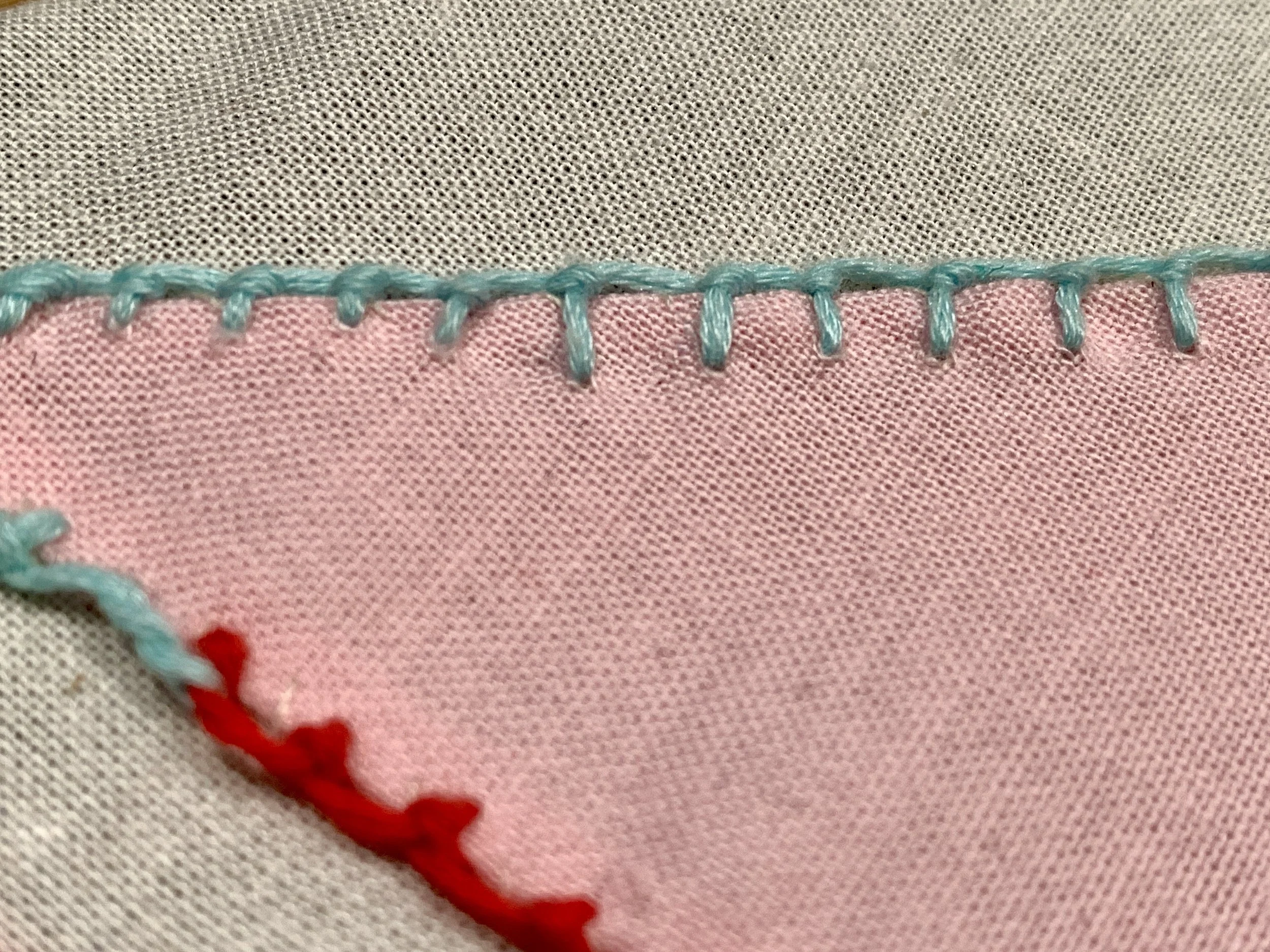
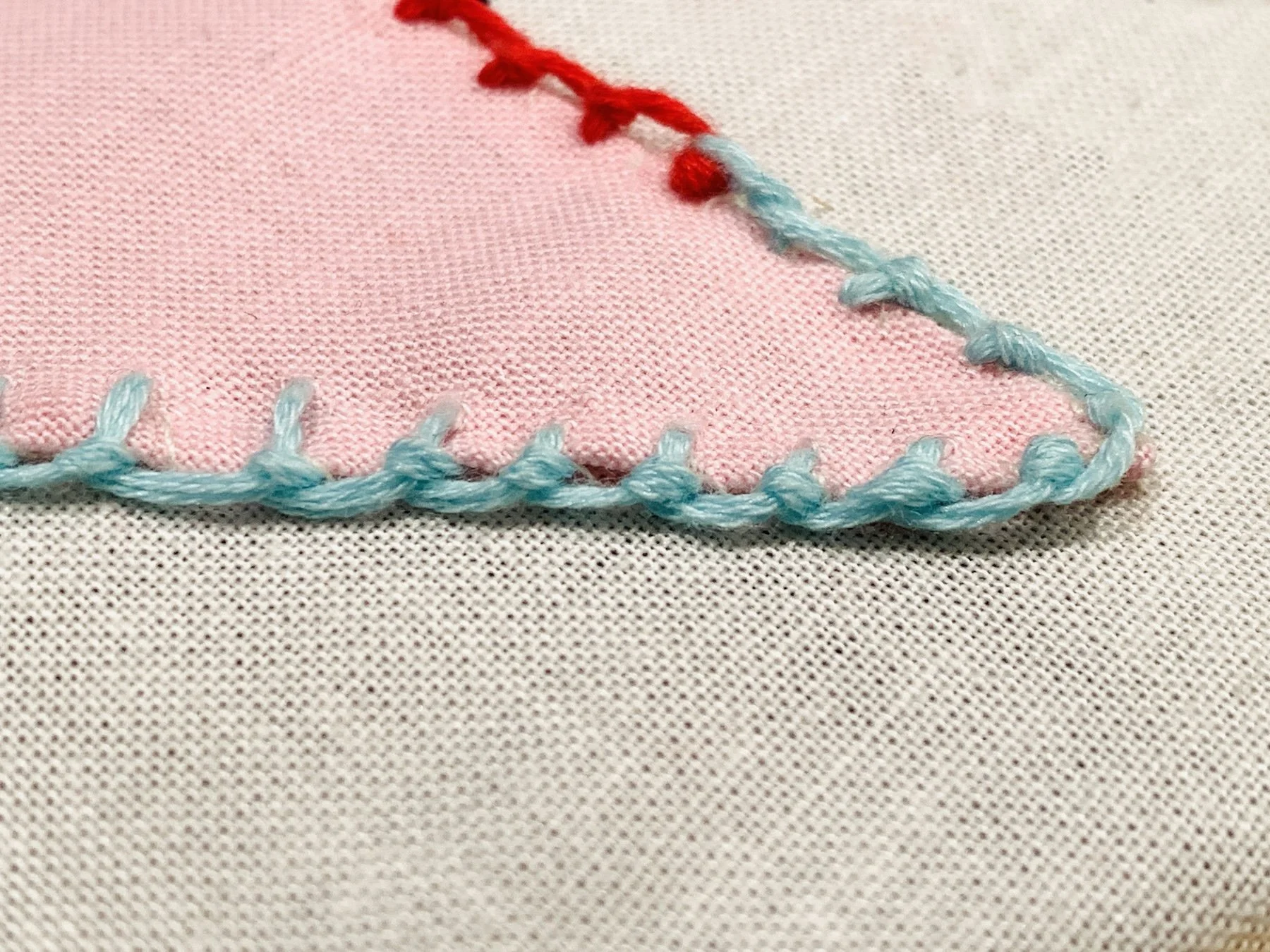
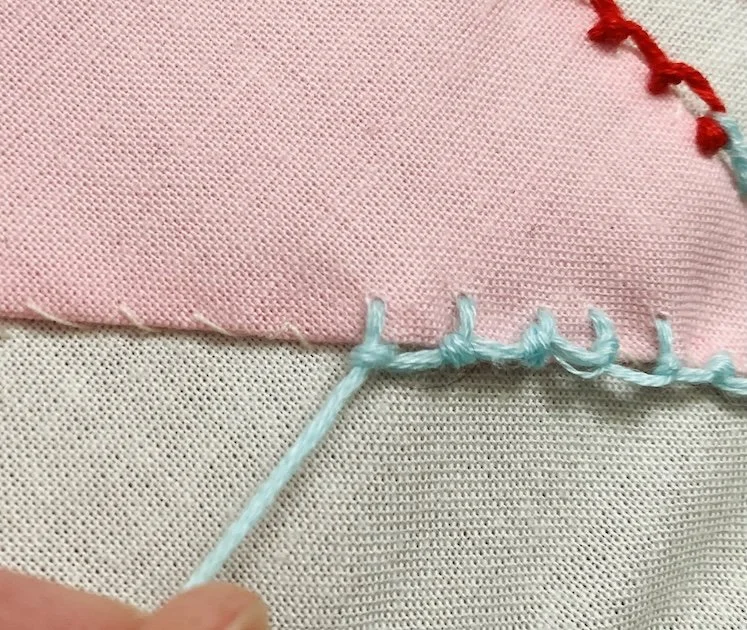
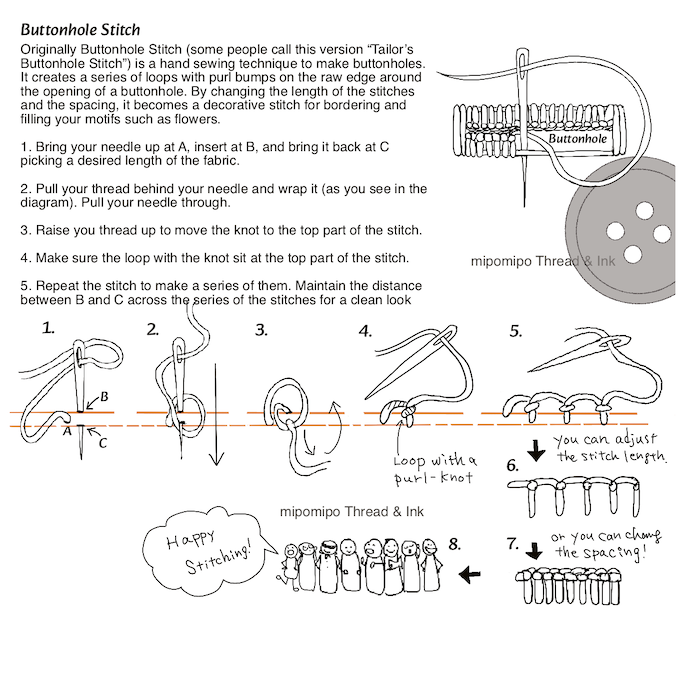
Buttonhole stitch (sometimes called Tailor’s Buttonhole Stitch) was originally used to reinforce the edges of a buttonhole with hand stitching. It forms purl-like bumps along the raw edge, and a row of these bumps helps prevent the buttonhole from fraying.
This stitch is also used for making stumpwork—3D motifs.
Is Buttonhole Stitch same as Blanket Stitch?
Is Buttonhole Stitch same as Tailor’s Buttonhole Stitch?
I noticed there are two different stitches both being called "Buttonhole Stitch." Which one should we call "Buttonhole Stitch"?
Buttonhole Stitch and Blanket Stitch are often treated as the same stitch online, but I learned a clear distinction from my mom and also in my home economics class of Japanese middle school in Japan. My mom is a real sewist—making dresses, suits, and even my wedding gown—So her teaching shapes how I think about these stitches (it doesn’t mean that my understanding is the correct one).
My understanding passed on by my mom
Both stitches form a series of L shapes (upside-down L or mirrored L).
Blanket Stitch: the L shapes connect directly to one another (no extra loop between), commonly used along blanket edges.
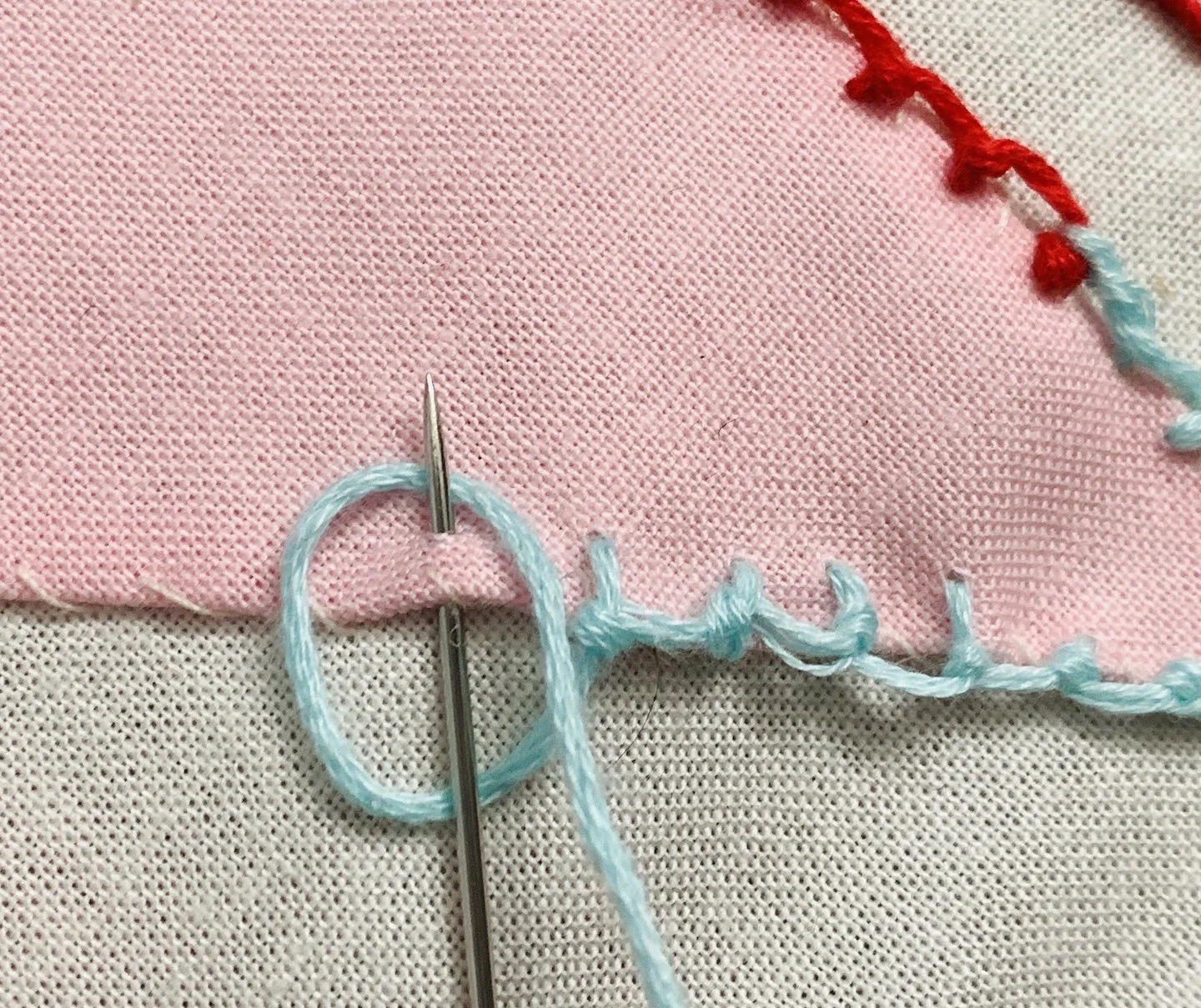
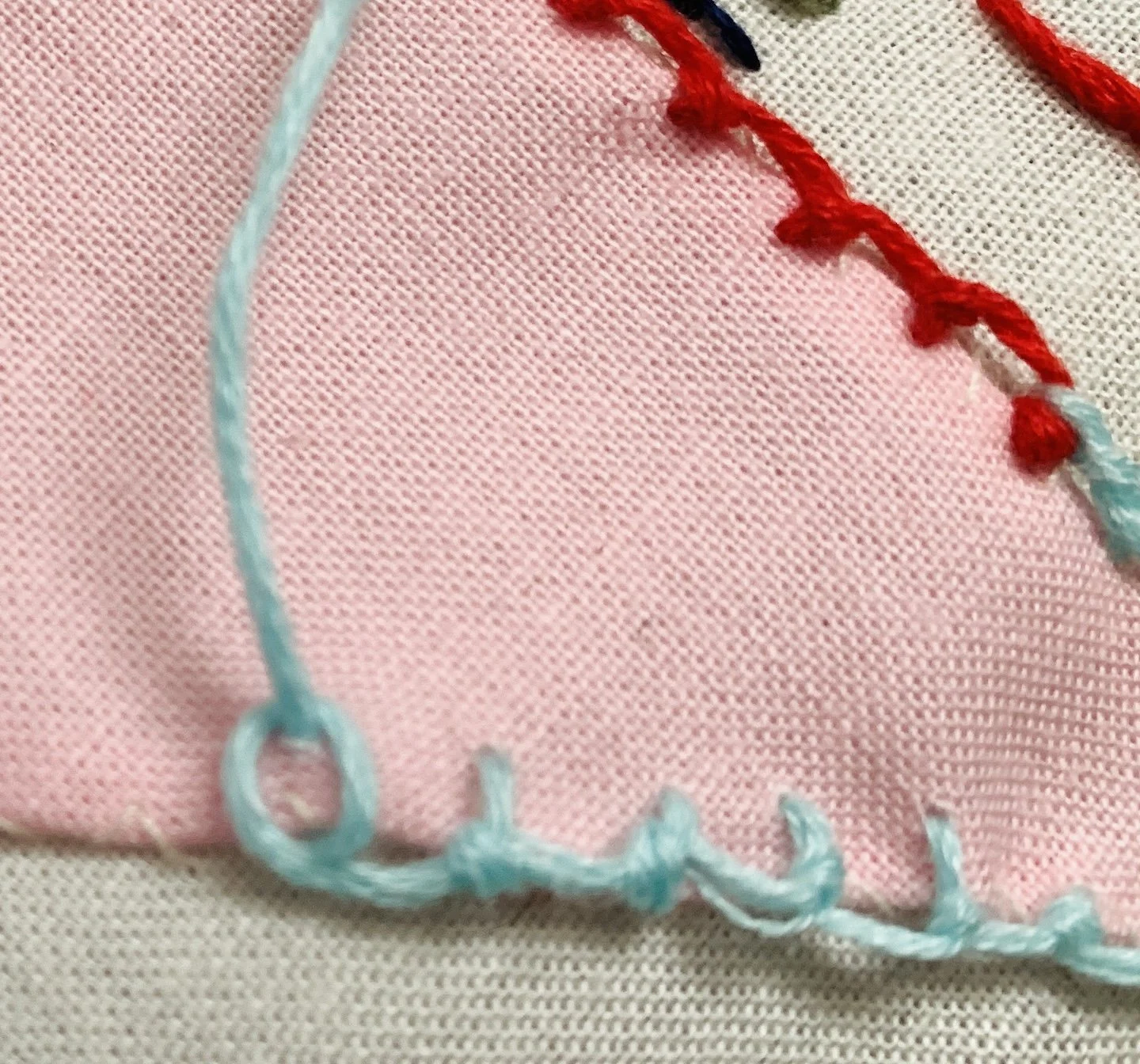
Buttonhole Stitch: each L is connected with a twist that creates a knot-like loop between L shapes, adding extra strength for raw buttonhole edges.
What I found researching:
Two main perspectives exist.
Perspective 1: The soft L–shaped stitch is called Buttonhole Stitch (and sometimes Blanket Stitch when used on blanket edges). The knot-loop version is labeled more specifically as Tailor’s Buttonhole Stitch. Wow! it sounds professional!
Perspective 2: The soft L–shaped stitch is Blanket Stitch, and the knot-loop version is Buttonhole Stitch — the view my mom taught me.
Which to use in the stitch library?
There’s no single “correct” answer across stitch references. For my tutorials and index names, I adapt perspective 2 for consistency (because this is the one my mom taught me! -and yes, the Japanese Home economics classes too.) However, to avoid confusing readers, I documented both perspectives. I will also add this note on Blanket Stitch and Detached Buttonhole Stitch tutorial pages explaining the two viewpoints so readers can choose the terminology that makes sense to them.
Off the topic- Japanese home economics class is a mandatory class for all students in the upper grades of elementary school and in middle school in Japan. In middle school, the class is called “Technology and Home Economics,” and all boys and girls learn cooking, sewing, budgeting, growing vegetables, and making things like bookshelves, LED lights, and robots. Yes, the class is very compulsory, along with Japanese language, Social Studies, Math, Science, Music, Art, Health & PE, and Foreign Language (English). Interesting?